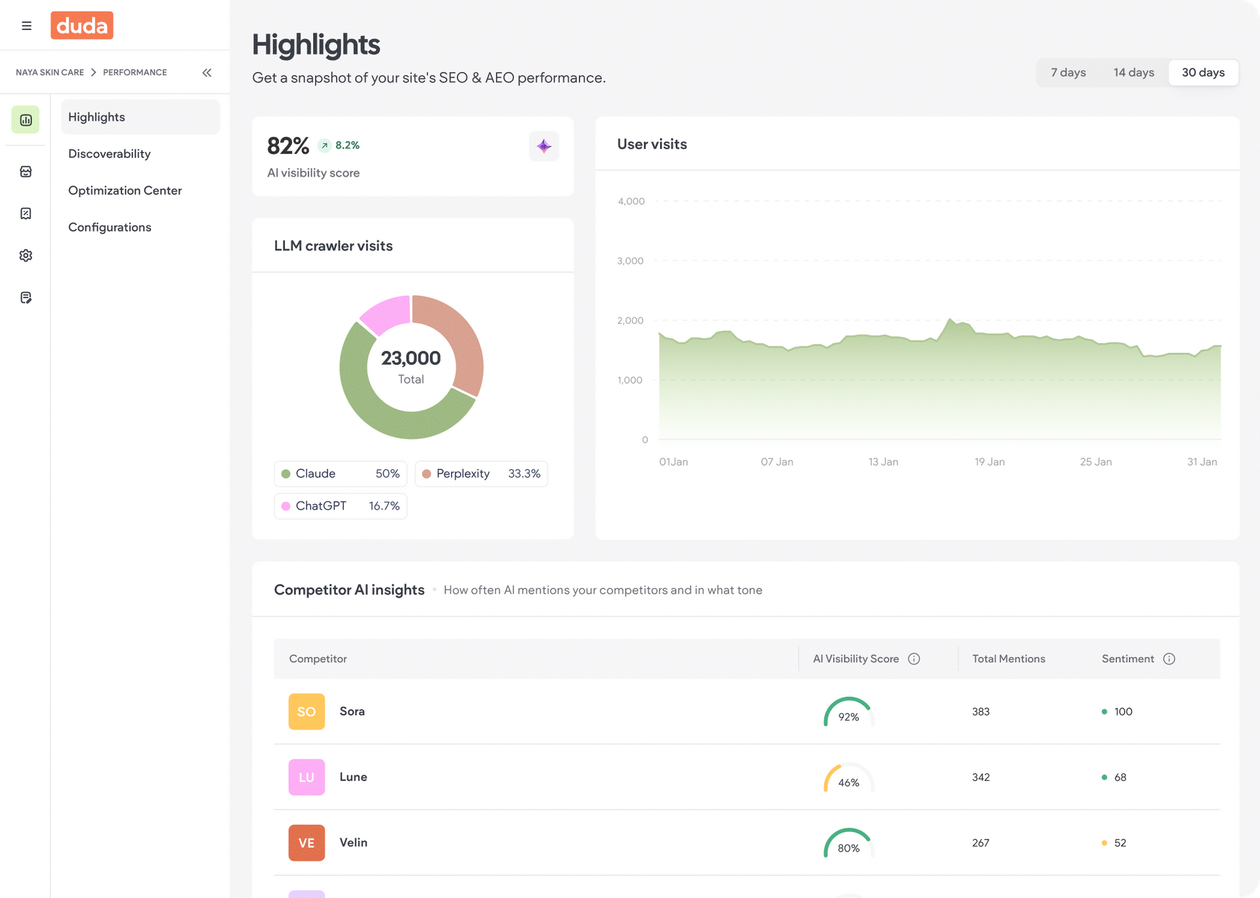
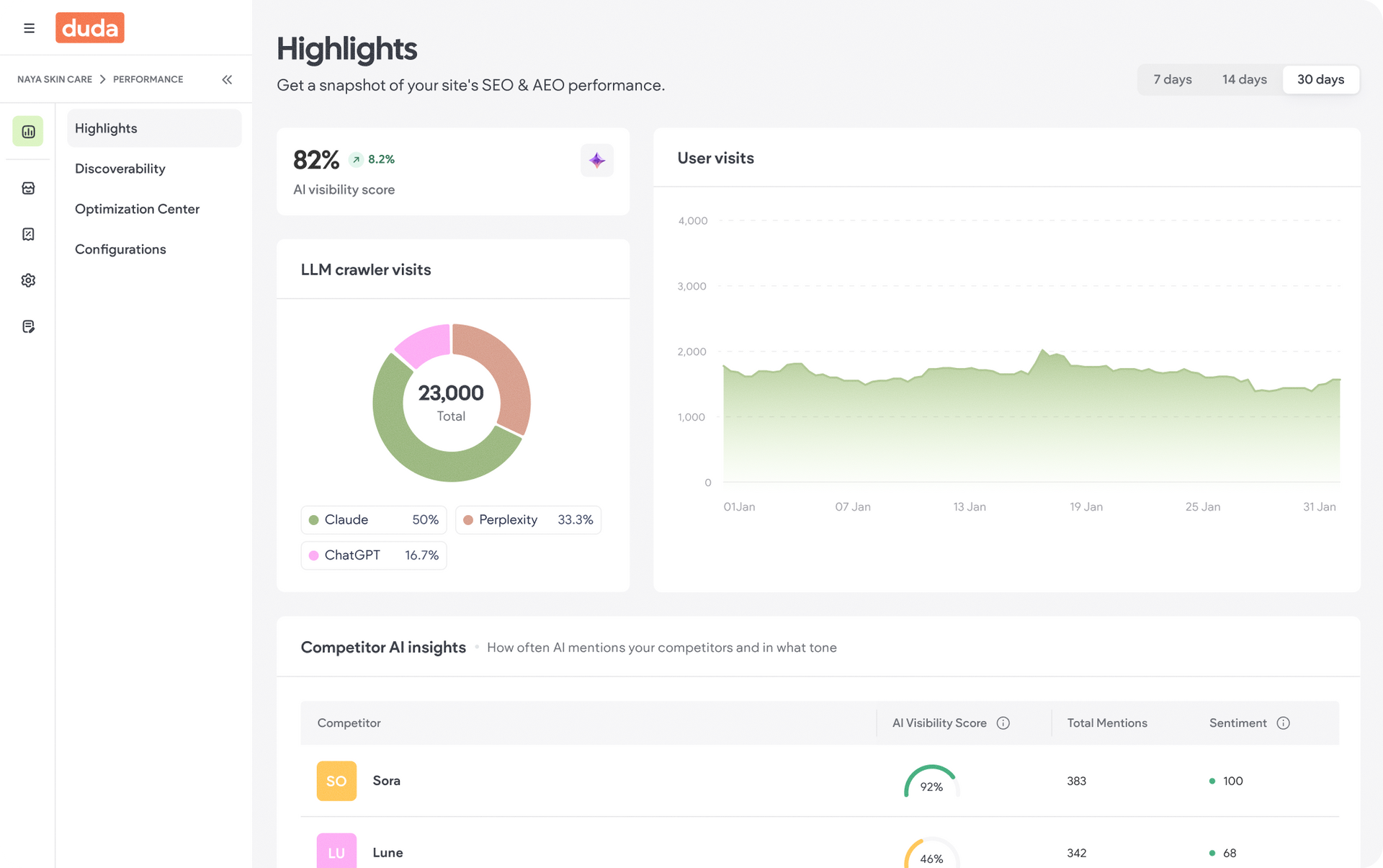
When it comes to SEO and AEO, Duda does the hard work for you, so you can focus on building sites that convert.


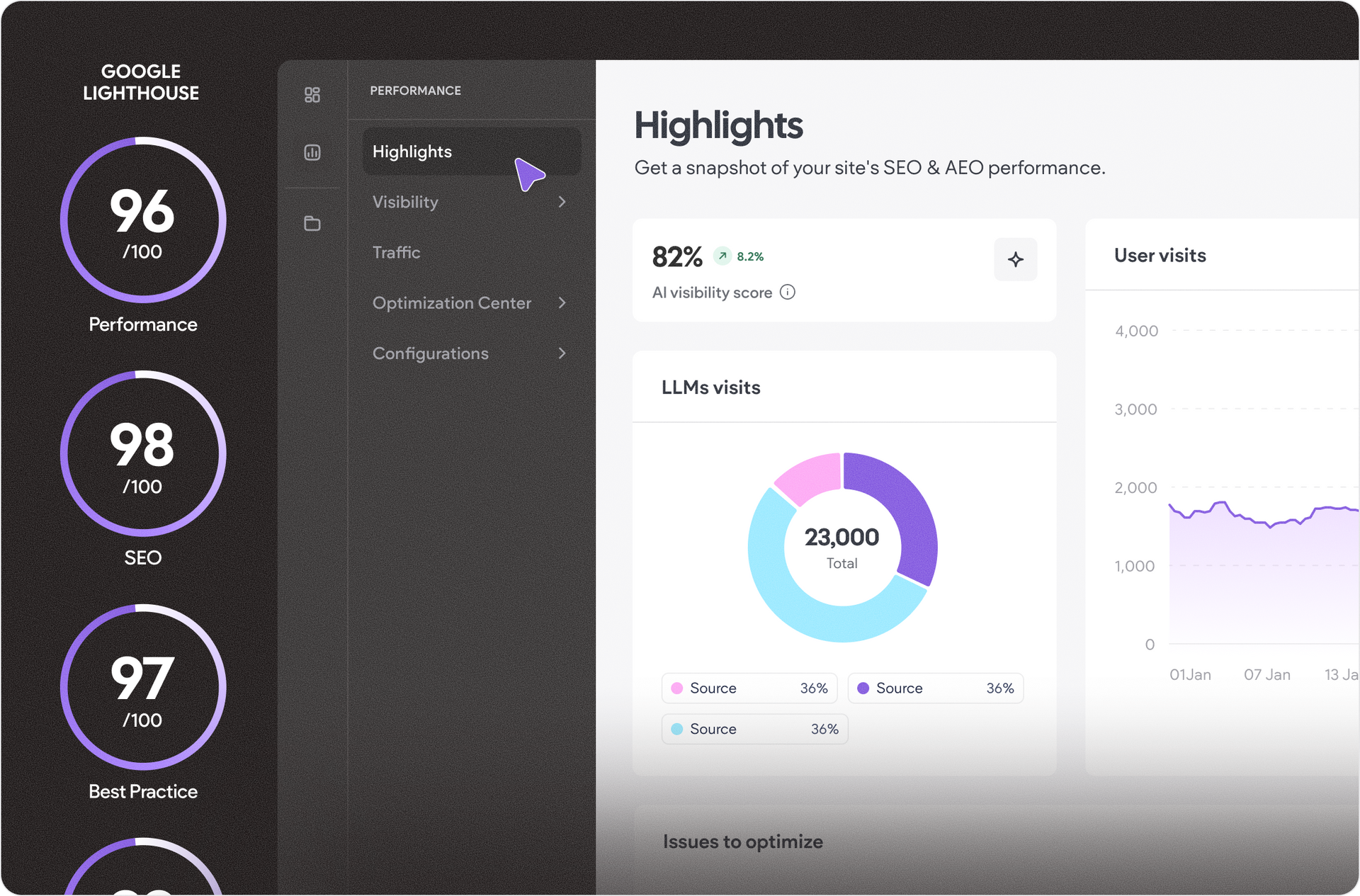
Duda’s built-in performance dashboard and AI Stack make optimizing client sites 9X faster and infinitely easier.


From SEO optimization to AI visibility
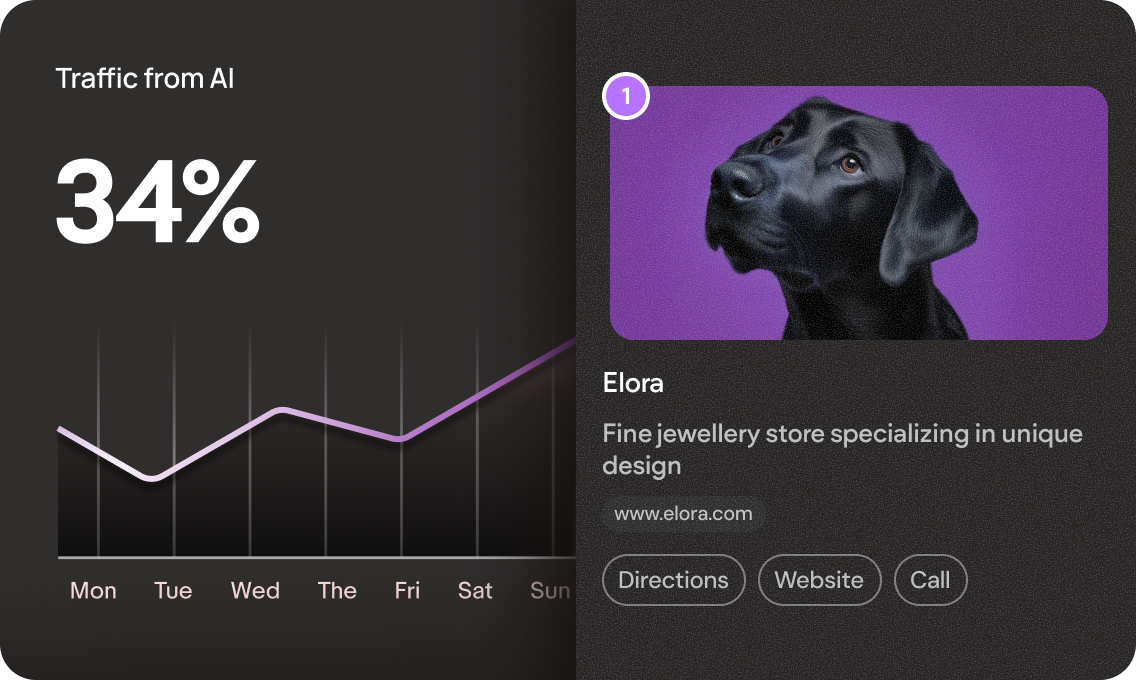
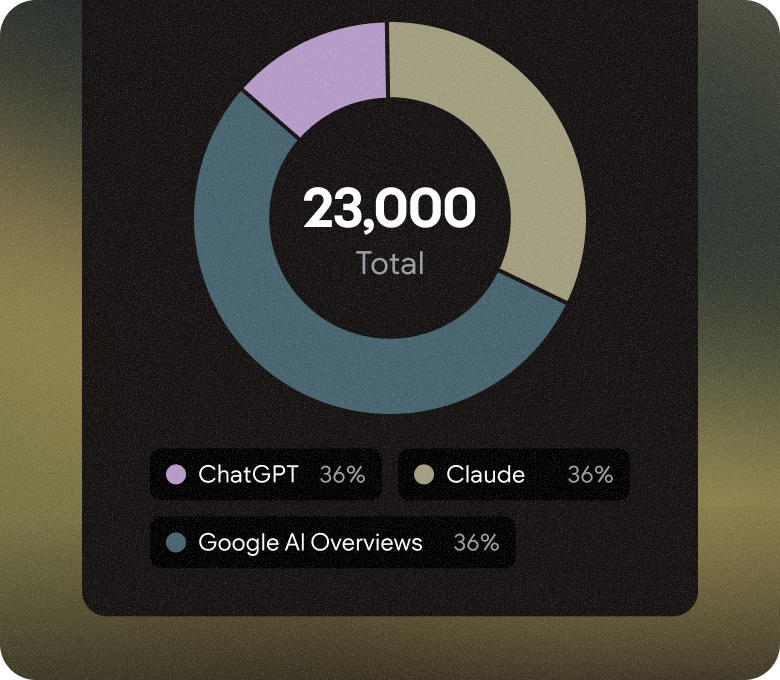
Understand how AI platforms are talking about your clients’ brands, and how often, with Duda’s comprehensive suite of AI Visibility tools.


Mostly, yes. Duda allows you to add meta tags directly to the header of individual pages or across the whole site, if you want to add your own. There are some tags (like the canonical) that we do not currently allow you to alter, as it’s important Duda sets it correctly on your behalf and they don’t get out of sync with the actual page URLs.
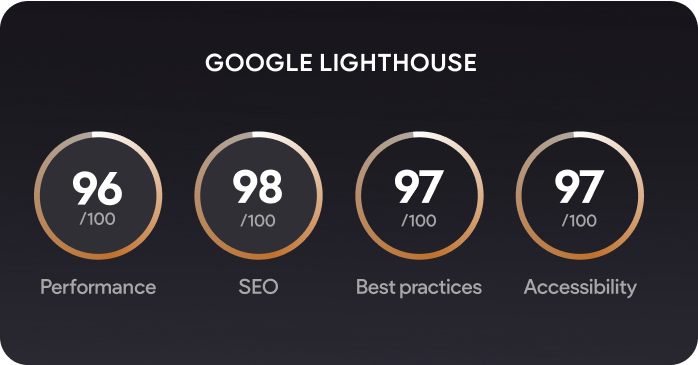
Websites built on Duda lead the industry in Google’s Core Web Vitals performance metric, and the platform continues to improve.
Duda generates a wide variety of schemas automatically, depending on the structure of your site and the widgets that you use. Some examples of supported schemas are; Video, Blog, Article, Product, LocalBusiness, FAQ, and more. In addition, it’s easy to generate your own schema and add it to your website by following the instructions in our Schema Markup support article.
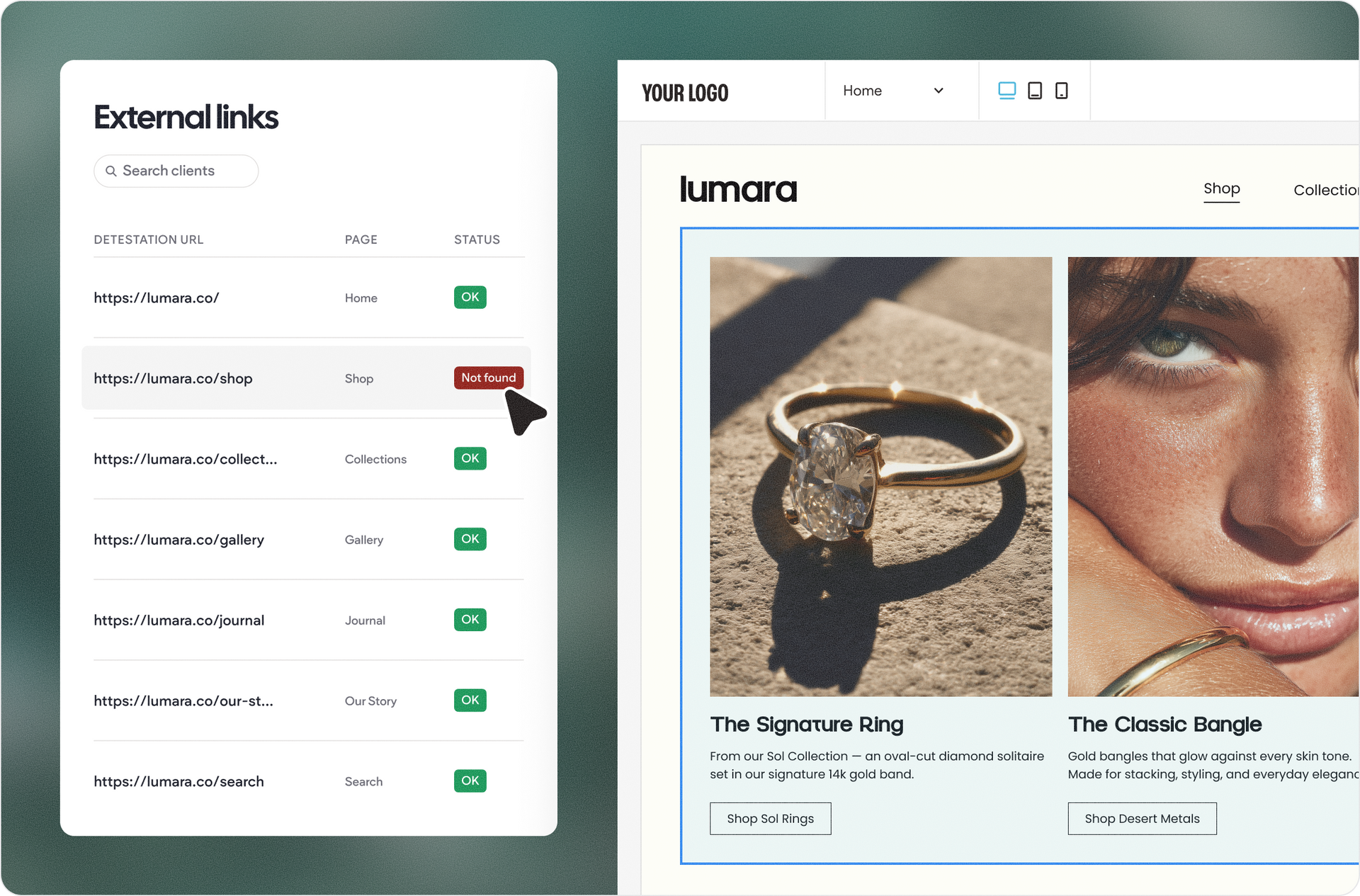
Duda’s built-in Site Performance dashboard identifies some of the most commonly missed optimization opportunities, like broken links and missing alt text, then offers streamlined solutions to capitalize on those opportunities. Duda monitors how those optimizations impact search and answer performance in the form of both a composite “AI Visibility” score as well as direct integration with Google’s Search Console.
Duda offers a wealth of educational materials focusing on discovery. From our free webinars, to informative and regularly published blog articles, we’re here to help your sites rank. For more hands-on support, a curated selection of Duda Experts are available to take your organic traffic to the next level.
At Duda, we like to say that AEO is SEO at scale. Many of the same best-practices apply, but now they need to be applied more often and at higher quantities. That means more pages and more content per page, all updated more often.